Follow Us:

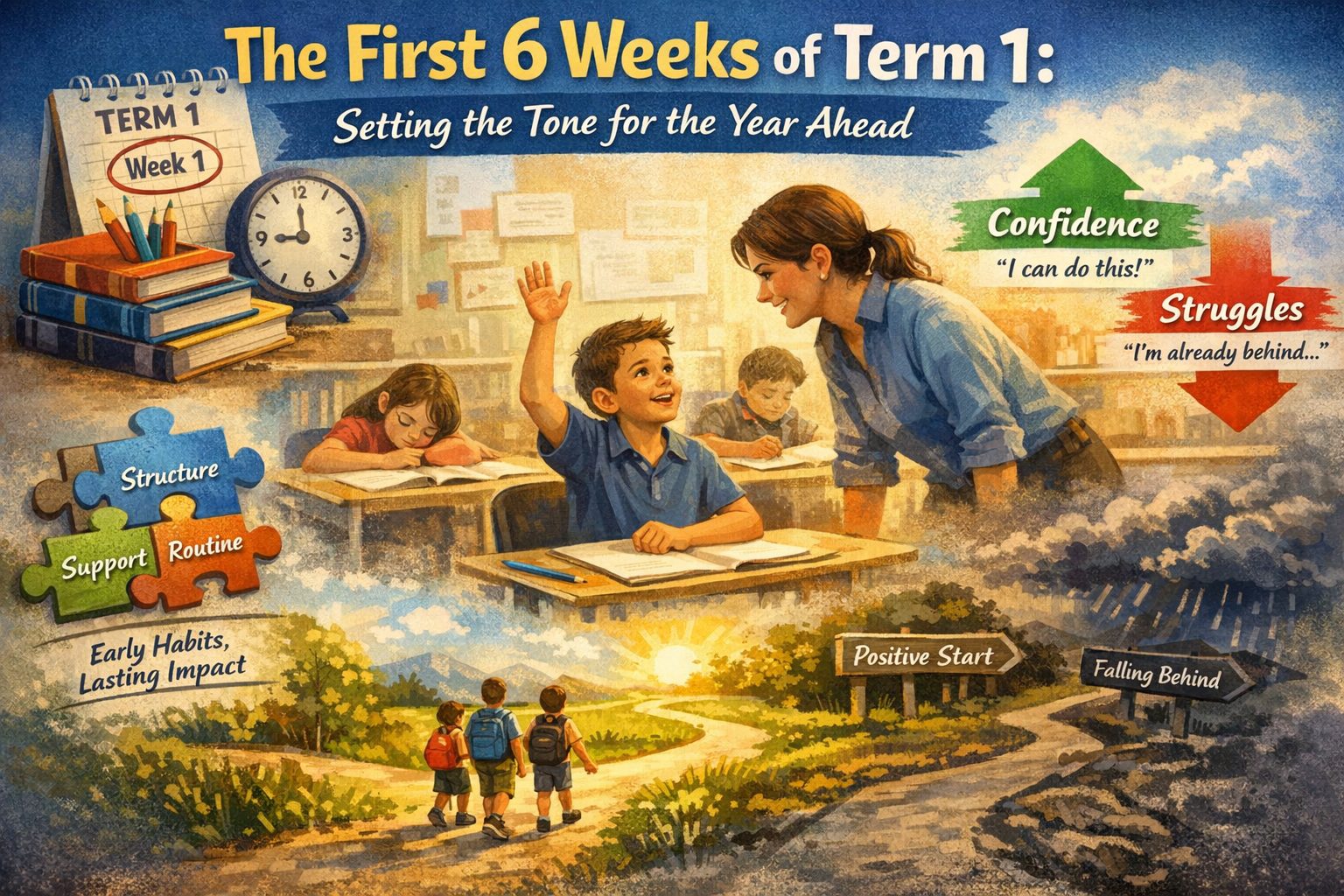
Why the First 6 Weeks of Term 1 Determine the Rest of the Year
The beginning of the school year often feels deceptively calm.
New books. New routines. A fresh start.
But beneath the surface, the first six weeks of Term 1 quietly shape how the rest of the year unfolds — academically, emotionally, and behaviourally.
For many families, this period determines whether learning feels manageable or stressful, whether confidence builds or erodes, and whether small gaps grow into ongoing struggles.
The good news?
With the right structure and support, these early weeks can become a powerful foundation rather than a pressure point.
Why the First Weeks Matter More Than Parents Realise
In the early weeks of Term 1, children are doing far more than learning new content.
They are:
- Re-adjusting to routines
- Rebuilding confidence after a long break
- Interpreting expectations from teachers
- Deciding whether school feels safe, overwhelming, or manageable
When uncertainty isn’t addressed early, children often cope quietly — through avoidance, resistance, or disengagement. By the time concerns become obvious, a large part of the term has already passed.
Early structure helps children settle emotionally before learning pressure increases.
Confidence Is the First Thing to Shift — For Better or Worse
Before grades change, confidence changes.
In the first few weeks, children begin to form internal beliefs:
“I can do this.”
“I’m already behind.”
“I don’t want to try.”
These beliefs shape:
Effort levels
Willingness to ask for help
Homework behaviour
Emotional responses to school
When confidence drops early, academic progress becomes harder — not because of ability, but because of anxiety and avoidance.
This is why early support should focus as much on emotional safety and clarity as it does on academic skills.
Why ‘Waiting to See How They Go’ Often Backfires
Many parents understandably take a “wait and see” approach at the start of the year.
Unfortunately, learning gaps don’t pause while families wait.
Without early intervention:
- Small misunderstandings compound
- Habits form around avoidance or rushing
- Children normalise struggling silently
By the time concerns feel urgent, catching up often requires more effort and more emotional repair than if support had been introduced earlier.
Early structure doesn’t mean pressure.
It means prevention.
What Productive Support Looks Like in the First 6 Weeks
Effective early-term support is calm, consistent, and planned.
It includes:
- A clear understanding of where a child is starting (academically and emotionally)
- A structured weekly learning plan
- Predictable lesson flow so children know what to expect
- Gentle confidence-building embedded into each session
- Regular check-ins to ensure things are working
When children know there’s a plan — and that someone else is managing it — anxiety reduces and engagement improves.
Why Consistency Matters More Than Intensity
In Term 1, consistency beats intensity.
One well-planned session each week, delivered reliably, often has more impact than sporadic bursts of extra help.
Consistency:
- Builds trust
- Reinforces routines
- Allows confidence to grow gradually
- Creates predictable progress that parents can see
Learning becomes part of life again — not a battle to fight.
Setting the Tone for the Rest of the Year
The first six weeks don’t need to be perfect.
They just need to be supported.
When children start the year feeling:
- Seen
- Capable
- Calm
- Clear about expectations
Everything that follows becomes easier.
Early structure creates momentum.
Momentum creates confidence.
And confidence is what carries children through the rest of the year.
Final Thought for Parents
You don’t need to push harder this year.
You don’t need to wait until things feel urgent.
The right support, introduced early, can quietly change the trajectory of the entire year — without pressure, stress, or overwhelm.
Ready to see how tutoring could support your child?
Book a Free Consultation and we’ll help you decide what kind of support will help your child grow.
Latest Posts
Personalised 1-on-1 in-home tutoring for students in Years 1–12, available in Brisbane, Gold Coast, Melbourne, Adelaide and Canberra.
Personalised 1-on-1 in-home tutoring for students in Years 1–12, available in Brisbane, Gold Coast, Melbourne, and Adelaide.
Follow Us:
Follow Us:
Quick Links
Quick Links
Contact Information
Contact Information
ABN: 81 166 455 572
ABN: 81 166 455 572


Copyright text 2026 by Tutor2You